
Hong Kong pro-democracy July 1 march takes over streets on 20th anniversary of city’s handover
Thousands join annual march from Victoria Park, which kicked off a few hours after President Xi Jinping ended his visit to the city, but rain causes cancellation of rally

Ng Kang-chungEmily TsangRachel BlundyJulia HollingsworthElizabeth Cheung

POLITICS
Protesters claim they were assaulted by police at July 1 march1 Jul 2017
Related Articles
POLITICS
Protesters claim they were assaulted by police at July 1 march1 Jul 2017
LAW & CRIME
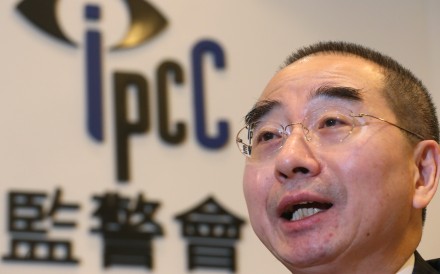
Police watchdog to observe July 1 anti-government march22 Jun 2017
POLITICS
‘No political motivation involved in July 1 Victoria Park booking’31 May 2017
Tens of thousands of pro-democracy protesters took part in a march on Saturday afternoon marking the 20th anniversary of Hong Kong’s handover from British to Chinese rule.
Organisers said 60,000 had taken part, but the police estimate – which tends to be lower than organisers’ – was not immediately available.
Hong Kong pan-democrats cast doubt on Xi’s softer approach to talks with political opponents
Bad weather was partly to blame for turnout not hitting the 100,000 predicted by organisers, who had to abort a planned public rally outside the government headquarters, at the end of the route.
Rain-soaked marchers dispersed quickly after arriving at the end point, swamping the concourse of Admiralty MTR station.
The 3km march started at Victoria Park in Causeway Bay, and was set to end at the government building at Tamar Park.
Watch: Raymond Yeung reports from the scene
Participants set off shortly after 3pm, two hours after President Xi Jinping concluded his three-day visit to the city.
At 3.10pm, Lam Wing-kee, one of the five Causeway Bay booksellers controversially taken into mainland custody in 2015, made a speech on the stage.

A coalition of pro-Beijing groups also held events in the park, while other opponents of the pan-democrats swamped the alleys nearby, condemning the bloc and “anti-China elements”.
Au Nok-hin, convenor of the Civil Human Rights Front, which organised the event, said more and more people were getting frustrated by the increasing influence of Beijing on the city, which is supposed to enjoy a high degree of autonomy.
Au said that growing concerns over jailed mainland dissident Liu Xiaobo and Beijing’s recent claim that the Sino-British Joint Declaration “no longer has any realistic meaning” could spark more people to take to the streets.
He was referring to the remarks of the Chinese foreign ministry spokesman who on Friday said the joint declaration of 1984 no longer had practical significance or binding force on Beijing.
Liu, who received the Nobel Peace Prize for his writings promoting political reform in China, was recently granted parole to be treated for late-stage liver cancer.

The pro-democracy marches, which have been held annually on handover day since 1997, became increasingly significant in 2003 after half a million protesters came out against a government plan to introduce an antisubversion law.
Turnout was lowest in 2005 when only 21,000 people took part, according to the organisers.
The front had used pitches at Victoria Park, which can accommodate tens of thousands of people, as the starting point for marches since 2004.
But this year it was forced to kick things off on the park’s lawn, because the six football pitches were booked by the Hong Kong Celebrations Association, a group of about 40 pro-Beijing groups and business chambers.
Xi’s four key points for moving forward under ‘one country, two systems’
Regular marchers looked confused by the switch when they entered the park as usual.
Volunteers and marshals soon directed them to make a 5-minute walk to the starting point.
One of the marchers was 70-year-old poet Ms Kwan, who said she’d been going to the annual march since 1997.
“I don’t understand politics, and don’t really want to comment on it,” she said. “But how can I not come out, seeing my beloved city shrinking in terms of freedom of speech?”

She said it had taken her an hour to make the Chinese calligraphy board she carried, which had a message for the government.
“We are not begging for sympathy but seeking justice. One country, two systems has been cheating Hongkongers for 20 years,” one of the lines read.
Hongkonger Wong Ting-kwok, 67, said he had also been coming to the march for 20 years. He said he continued to come out every year to remind people that the mainland government made promises about the city’s autonomy, but he said the political situation was getting worse.
Two Hong Kong pan-democrats pass protest letters to Beijing official at banquet sidelines
“In the beginning we did have hope for change,” he said, adding that those hopes had faded because of the situation on the mainland.
He said he did not expect Chief Executive Carrie Lam Cheng Yuet-ngor to do much for Hong Kong, saying she had achieved little in her previous political roles.
Isaac Cheng Ka-long, 17, who is a standing committee member for political party Demosisto, said he joined the pro-democracy movement a year ago because he wanted universal suffrage.

“When Hong Kong has a more democratic situation, everyone will be more willing to listen to the voices of our people,” he said. “Some people think we are just creating chaos for Hong Kong, but actually we are not. We want to gain universal suffrage.”
Not everyone along the route was enthused by the protest’s message.
Some people think we are just creating chaos for Hong Kong ... We want to gain universal suffrage
ISAAC CHENG, DEMOSISTO
Sam Hui, a 24-year-old Hongkonger who had moved back to the city a week earlier after years living in Beijing and the UK, came out to watch the protest, but didn’t bother joining it.
The video editor and photographer said he didn’t know why anyone would protest.
“It seems futile to me,” he said, standingon Hennessy Road as the protesters walked past at around 4.15pm. “I don’t see anything changing [under Carrie Lam].”
Similarly apathetic was Eowlyn Tsang, a 24-year-old student at the University of Hong Kong, who saw the march go past while she was at Central Library. She said she had never been to a protest before, because “I have other better things to do, such as a business class earlier this morning.”
There were also some famous faces on the route.
Well-known Canto-pop singer and democracy advocate Denise Ho Wan-sze said it was her sixth year of going to the march.
Also an LGBT rights campaigner, Ho said she had been trying to push the government to pass several bills on the issue since 2012, but with little progress.

“I wish Carrie Lam to bring some change to the situation, but it seems not very likely,” she said.
Ho was joined by 55-year-old singer Anthony Wong Yiu-Ming, also a vocal LGBT rights activist.
He said he had been disappointed by Xi’s visit.
“Xi only talked to those politicians from the establishment camp, and tycoons, but not those from the grassroots communities in Hong Kong. I was really disappointed by that,” he said.
And actor Gregory Wong Chung-yiu was seen at the end of the throng, at the junction of Hennessy Road and Fleming Road.

“I think the July 1 march is something Hongkongers should do,” he said.
“We just want to tell the others we want more self-determination. I hope the function of Legislative Council will not worsen.”
Mei Lee, 40, and administrative worker, and Leo Chim, who is 39 and works at a digital agency, are a married couple. They said they had been at the march for the past few years.
“Many Hong Kong people are tired of politics and think there’s no use in coming out today,” Chim said.
“The government is arranging other celebration events to cover our voice. Our voice will become smaller and smaller in the future.”
In a statement responding to the march, a government spokesman said the Basic Lawprotected and upheld “core values such as freedom, human rights, democracy, rule of law and clean governance”.
Interactive: 20 years, 20 visualisations
The government said it understood people’s desire for universal suffrage, but that given the “extremely controversial nature of the issue, we must prudently consider all related factors and seek consensus.”
The end of the procession reached Tamar at 7.10pm.
www.fotavgeia.blogspot.com
Thousands join annual march from Victoria Park, which kicked off a few hours after President Xi Jinping ended his visit to the city, but rain causes cancellation of rally
Ng Kang-chungEmily TsangRachel BlundyJulia HollingsworthElizabeth Cheung
POLITICS
Protesters claim they were assaulted by police at July 1 march1 Jul 2017
Related Articles
POLITICS
Protesters claim they were assaulted by police at July 1 march1 Jul 2017
LAW & CRIME
Police watchdog to observe July 1 anti-government march22 Jun 2017
POLITICS
‘No political motivation involved in July 1 Victoria Park booking’31 May 2017
Tens of thousands of pro-democracy protesters took part in a march on Saturday afternoon marking the 20th anniversary of Hong Kong’s handover from British to Chinese rule.
Organisers said 60,000 had taken part, but the police estimate – which tends to be lower than organisers’ – was not immediately available.
Hong Kong pan-democrats cast doubt on Xi’s softer approach to talks with political opponents
Bad weather was partly to blame for turnout not hitting the 100,000 predicted by organisers, who had to abort a planned public rally outside the government headquarters, at the end of the route.
Rain-soaked marchers dispersed quickly after arriving at the end point, swamping the concourse of Admiralty MTR station.
The 3km march started at Victoria Park in Causeway Bay, and was set to end at the government building at Tamar Park.
Watch: Raymond Yeung reports from the scene
Participants set off shortly after 3pm, two hours after President Xi Jinping concluded his three-day visit to the city.
At 3.10pm, Lam Wing-kee, one of the five Causeway Bay booksellers controversially taken into mainland custody in 2015, made a speech on the stage.
A coalition of pro-Beijing groups also held events in the park, while other opponents of the pan-democrats swamped the alleys nearby, condemning the bloc and “anti-China elements”.
Au Nok-hin, convenor of the Civil Human Rights Front, which organised the event, said more and more people were getting frustrated by the increasing influence of Beijing on the city, which is supposed to enjoy a high degree of autonomy.
Au said that growing concerns over jailed mainland dissident Liu Xiaobo and Beijing’s recent claim that the Sino-British Joint Declaration “no longer has any realistic meaning” could spark more people to take to the streets.
He was referring to the remarks of the Chinese foreign ministry spokesman who on Friday said the joint declaration of 1984 no longer had practical significance or binding force on Beijing.
Liu, who received the Nobel Peace Prize for his writings promoting political reform in China, was recently granted parole to be treated for late-stage liver cancer.
The pro-democracy marches, which have been held annually on handover day since 1997, became increasingly significant in 2003 after half a million protesters came out against a government plan to introduce an antisubversion law.
Turnout was lowest in 2005 when only 21,000 people took part, according to the organisers.
The front had used pitches at Victoria Park, which can accommodate tens of thousands of people, as the starting point for marches since 2004.
But this year it was forced to kick things off on the park’s lawn, because the six football pitches were booked by the Hong Kong Celebrations Association, a group of about 40 pro-Beijing groups and business chambers.
Xi’s four key points for moving forward under ‘one country, two systems’
Regular marchers looked confused by the switch when they entered the park as usual.
Volunteers and marshals soon directed them to make a 5-minute walk to the starting point.
One of the marchers was 70-year-old poet Ms Kwan, who said she’d been going to the annual march since 1997.
“I don’t understand politics, and don’t really want to comment on it,” she said. “But how can I not come out, seeing my beloved city shrinking in terms of freedom of speech?”
She said it had taken her an hour to make the Chinese calligraphy board she carried, which had a message for the government.
“We are not begging for sympathy but seeking justice. One country, two systems has been cheating Hongkongers for 20 years,” one of the lines read.
Hongkonger Wong Ting-kwok, 67, said he had also been coming to the march for 20 years. He said he continued to come out every year to remind people that the mainland government made promises about the city’s autonomy, but he said the political situation was getting worse.
Two Hong Kong pan-democrats pass protest letters to Beijing official at banquet sidelines
“In the beginning we did have hope for change,” he said, adding that those hopes had faded because of the situation on the mainland.
He said he did not expect Chief Executive Carrie Lam Cheng Yuet-ngor to do much for Hong Kong, saying she had achieved little in her previous political roles.
Isaac Cheng Ka-long, 17, who is a standing committee member for political party Demosisto, said he joined the pro-democracy movement a year ago because he wanted universal suffrage.
“When Hong Kong has a more democratic situation, everyone will be more willing to listen to the voices of our people,” he said. “Some people think we are just creating chaos for Hong Kong, but actually we are not. We want to gain universal suffrage.”
Not everyone along the route was enthused by the protest’s message.
Some people think we are just creating chaos for Hong Kong ... We want to gain universal suffrage
ISAAC CHENG, DEMOSISTO
Sam Hui, a 24-year-old Hongkonger who had moved back to the city a week earlier after years living in Beijing and the UK, came out to watch the protest, but didn’t bother joining it.
The video editor and photographer said he didn’t know why anyone would protest.
“It seems futile to me,” he said, standingon Hennessy Road as the protesters walked past at around 4.15pm. “I don’t see anything changing [under Carrie Lam].”
Similarly apathetic was Eowlyn Tsang, a 24-year-old student at the University of Hong Kong, who saw the march go past while she was at Central Library. She said she had never been to a protest before, because “I have other better things to do, such as a business class earlier this morning.”
There were also some famous faces on the route.
Well-known Canto-pop singer and democracy advocate Denise Ho Wan-sze said it was her sixth year of going to the march.
Also an LGBT rights campaigner, Ho said she had been trying to push the government to pass several bills on the issue since 2012, but with little progress.
“I wish Carrie Lam to bring some change to the situation, but it seems not very likely,” she said.
Ho was joined by 55-year-old singer Anthony Wong Yiu-Ming, also a vocal LGBT rights activist.
He said he had been disappointed by Xi’s visit.
“Xi only talked to those politicians from the establishment camp, and tycoons, but not those from the grassroots communities in Hong Kong. I was really disappointed by that,” he said.
And actor Gregory Wong Chung-yiu was seen at the end of the throng, at the junction of Hennessy Road and Fleming Road.
“I think the July 1 march is something Hongkongers should do,” he said.
“We just want to tell the others we want more self-determination. I hope the function of Legislative Council will not worsen.”
Mei Lee, 40, and administrative worker, and Leo Chim, who is 39 and works at a digital agency, are a married couple. They said they had been at the march for the past few years.
“Many Hong Kong people are tired of politics and think there’s no use in coming out today,” Chim said.
“The government is arranging other celebration events to cover our voice. Our voice will become smaller and smaller in the future.”
In a statement responding to the march, a government spokesman said the Basic Lawprotected and upheld “core values such as freedom, human rights, democracy, rule of law and clean governance”.
Interactive: 20 years, 20 visualisations
The government said it understood people’s desire for universal suffrage, but that given the “extremely controversial nature of the issue, we must prudently consider all related factors and seek consensus.”
The end of the procession reached Tamar at 7.10pm.
www.fotavgeia.blogspot.com

Δεν υπάρχουν σχόλια:
Δημοσίευση σχολίου