
OPINION & ANALYSIS
DIFFICULT MONTHS AHEAD: WHY ISRAEL IS AFRAID OF THE LIONS’ DEN
OCTOBER 20TH, 2022
By RAMZY BAROUD
This headline in the Israeli newspaper, the Jerusalem Post, only tells part of the story: “The Lions’ Den, Other Palestinian Groups are Endless Headache for Israel, PA.”
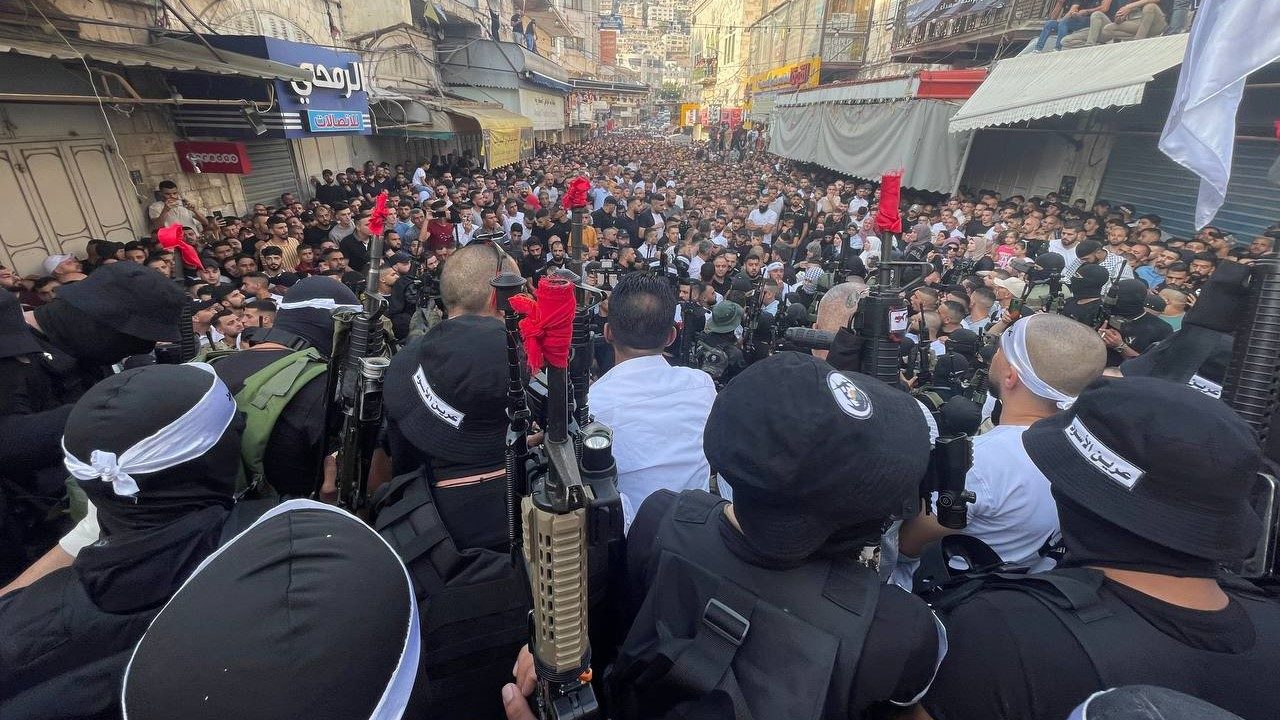
It is true that both the Israeli government and the Palestinian Authority are equally worried about the prospect of a widespread armed revolt in the Occupied West Bank, and that the newly formed Nablus-based brigade, the Lions’ Den, is the epicenter of this youth-led movement.
However, the growing armed resistance in the West Bank is causing more than a mere ‘headache’ for Tel Aviv and Ramallah. If this phenomenon continues to grow, it could threaten the very existence of the PA, while placing Israel before its most difficult choice since the invasion of major Palestinian West Bank cities in 2002.
Though Israeli military commanders continue to undermine the power of the newly formed group, they seem to have no clear idea regarding its roots, influence and future impact.
In a recent interview with the Israeli newspaper Yedioth Ahronoth, Israeli Defense Minister Benny Gantz claimed that the Lions’ Den is a “group of 30 members”, who will eventually be reached and eliminated. “We will lay our hands on the terrorists,” he declared.
The Lions’ Den, however, is not an isolated case, but part of a larger phenomenon that includes the Nablus Brigades, the Jenin Brigades and other groups, which are located mostly in the northern West Bank.
The group, along with other armed Palestinian military units, has been active in responding to the killing of Palestinians, including children, elders, and, on October 14, even a Palestinian doctor, Abdullah Abu al-Teen, who succumbed to his wounds in Jenin. According to the Palestinian Ministry of Health, over 170 Palestinians were killed in the West Bank and Gaza, since the beginning of the year.
The Palestinian response included the killing of two Israeli soldiers, one in Shuafat on October 8, and the other near Nablus on October 11.
Following the Shuafat attack, Israel completely sealed the Shuafat refugee camp as a form of collective punishment, similar to recent sieges on Jenin and other Palestinian towns.
Citing Israel’s Hebrew media, the Palestinian Arabic daily Al Quds reported that the Israeli military will focus its operations in the coming weeks on targeting the Lions’ Den. Thousands more Israeli occupation soldiers are likely to be deployed in the West Bank for the upcoming battle.
It is difficult to imagine that Israel would mobilize much of its army to fight 30 Palestinian fighters in Nablus. But not only Israel, the PA, too, is terribly concerned.
The Authority has tried but failed to entice the fighters by offering them a surrender ‘deal’, where they give up their arms and join the PA forces. Such deals were offered in the past to fighters belonging to Fatah’s Al Aqsa Martyrs Brigades, with mixed degrees of success.
This time around, the strategy did not work. The group rejected the PA’s overtures, compelling the Fatah-affiliated governor of Nablus, Ibrahim Ramadan, to attack the mothers of the fighters by calling them ‘deviant’ for “sending their sons to commit suicide.” Ramadan’s language, which is similar to language used by Israeli and pro-Israel individuals in their depiction of Palestinian society, highlights the massive schisms between the PA’s political discourse and those of ordinary Palestinians.
Not only is the PA losing grasp of the narrative, it is also losing whatever vestiges of control it has left in the West Bank, especially in Nablus and Jenin.
A senior Palestinian official told the Media Line that the Palestinian “street does not trust us anymore”, as they “view us as an extension of Israel.” True, but this lack of trust has been in the making for years.
The ‘Unity Intifada‘ of May 2021, however, served as a major turning point in the relationship between the PA and Palestinians. The rise of the Lions’ Den and other Palestinian armed groups are but a few manifestations of the dramatic changes underway in the West Bank.
Indeed, the West Bank is changing. A new generation that has little or no memory of the Second Intifada (2000-2005), had not experienced the Israeli invasion then but grew up under occupation and apartheid, feeding on the memories of the resistance in Jenin, Nablus and Hebron.
Judging by their political discourse, chants and symbols, this generation is fed up with the crippling and often superficial divisions of Palestinians among factions, ideologies and regions. In fact, the newly established brigades, including the Lions’ Den, are believed to be multi-factional groups bringing, for the first time, fighters from Hamas, Fatah and others into a single platform. This explains the popular enthusiasm and lack of suspicion among ordinary Palestinians of the new fighters.
For example, Saed al-Kuni, a Palestinian fighter who was recently killed by Israeli soldiers in an ambush on the outskirts of Nablus, was a member of the Lions’ Den. Some have claimed that al-Kuni was a leading member of Fatah’s Brigades, and others say he was a well-known Hamas fighter.
This lack of certainty regarding the political identity of killed fighters is fairly unique to Palestinian society, at least since the establishment of the PA in 1994.
As expected, Israel will do what it always does: amassing more occupation troops, attacking, assassinating, crushing protests and laying sieges on rebellious towns and refugee camps. What they fail to understand, at least for now, is that the growing rebellion in the West Bank is not generated by a few fighters in Nablus and a few more in Jenin, but is the outcome of a truly popular sentiment.
In an interview with Yedioth Ahronoth, translated by Al-Quds, an Israeli commander described what he has witnessed in Jenin during raids:
“When we enter [Jenin], armed fighters and stone throwers wait for us in every corner. Everyone takes part. You look at an old man … and you wonder, will he throw stones? And he does. Once, I saw a person who had nothing to throw [on us]. He rushed to his car, grabbed a milk carton and he threw it on us.”
Palestinians are simply fed up with the Israeli occupation and with their collaborating leadership. They are ready to put it all on the line, in fact, in Jenin and Nablus, they already have. The coming weeks and months are critical for the future of the West Bank, and, in fact, for all Palestinians.
Feature photo | Palestinians including members of the Lion’s Den militant group in the West Bank city of Nablus, Palestine, attend a memorial service for Mohammed al-Azizi and Abdul Rahman Sobh on Sep. 2, 2022. | Photo published on the Lion’s Den Telegram channel.
Dr. Ramzy Baroud is a journalist, author and the Editor of The Palestine Chronicle. He is the author of six books. His latest book, co-edited with Ilan Pappé, is ‘Our Vision for Liberation: Engaged Palestinian Leaders and Intellectuals Speak out’. His other books include ‘My Father was a Freedom Fighter’ and ‘The Last Earth’. Baroud is a Non-resident Senior Research Fellow at the Center for Islam and Global Affairs (CIGA). His website is www.ramzybaroud.net
The views expressed in this article are the author’s own and do not necessarily reflect MintPress News editorial policy.
 Republish our stories! MintPress News is licensed under a Creative Commons Attribution-NonCommercial-ShareAlike 3.0 International License.
Join The ConversationNever Miss an Update
19 Comments
WHAT’S HOT
ISRAEL EXPERIMENTS ON PALESTINIANS WITH AI-POWERED GUN AT CHECKPOINTS
MARVEL HEADS REVEALED TO BE CLOSELY CONNECTED TO ISRAELI INTELLIGENCE
HOW COVERT BRITISH INFORMATION WARS TARGET RUSSIA, THREATENING CIVILIANS AND JOURNALISTS
JOHN PILGER: SILENCING THE LAMBS. HOW PROPAGANDA WORKS
HOW ONE SPOOK-RUN LONDON COLLEGE DEPARTMENT IS TRAINING THE WORLD’S SOCIAL MEDIA MANAGERS
WHY DO PALESTINIAN CHILDREN THROW STONES? ON THE DEATH OF RAYAN SULIMAN AND HIS FEAR OF MONSTERS
OCTOBER 13TH, 2022
By RAMZY BAROUD
Though Palestinian children develop political consciousness at a very young age, quite often their action of protesting against the Israeli military, chanting against invading soldiers or even throwing stones are not compelled by politics, but by something else entirely: their fear of monsters.
Children of my Gaza refugee camp were rarely afraid of monsters but of Israeli soldiers. This is all that we talked about before going to bed. Unlike imaginary monsters in the closet or under the bed, Israeli soldiers are real, and they could show up any minute – at the door, on the roof or, as was often the case, right in the middle of the house.
The recent tragic death of a 7-year-old, Rayan Suliman, a Palestinian boy from the village of Tuqu near Bethlehem, in the occupied West Bank, stirred up so many memories. The little boy with olive skin, innocent face and bright eyes fell on the ground while being chased by Israeli soldiers, who accused him and his peers of throwing stones. He fell unconscious, blood poured out of his mouth and, despite efforts to revive him, he ceased to breathe.
This was the abrupt and tragic end of Rayan’s life. All the things that could have been, all the experiences that he could have lived, and all the love that he could have imparted or received, all ended suddenly, as the boy lay face down on the pavement of a dusty road, in a poor village, without ever experiencing a single moment of being truly free, or even safe.
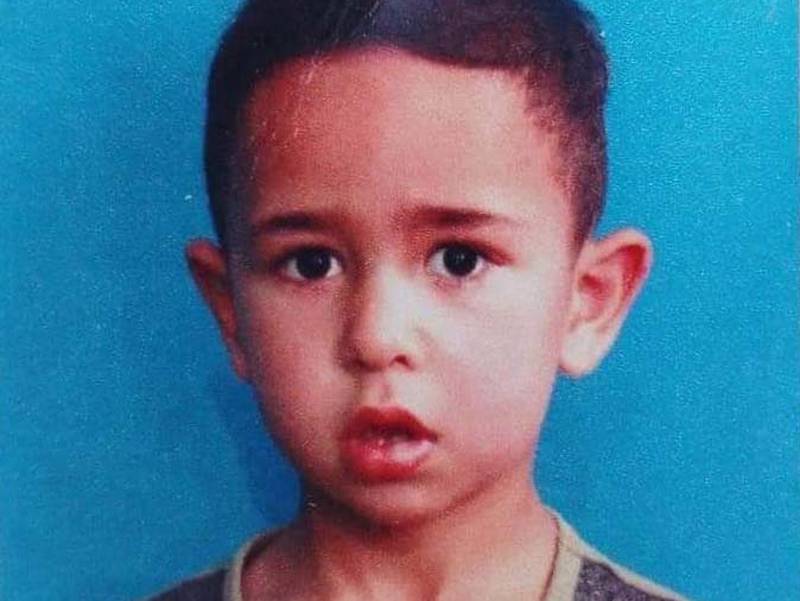
Seven year old Rayan Suleiman died of a heart attack after being chased down by armed Israeli soldiers. Credit | Wafa
Adults often project their understanding of the world on children. We want to believe that Palestinian children are warriors against oppression, injustice and military occupation. Though Palestinian children develop political consciousness at a very young age, quite often their action of protesting against the Israeli military, chanting against invading soldiers or even throwing stones are not compelled by politics, but by something else entirely: their fear of monsters.
This connection came to mind when I read the details of the harrowing experience that Rayan and many of the village children endure daily.
Tuqu is a Palestinian village that, once upon a time, existed in an uncontested landscape. In 1957, the illegal Jewish settlement of Tekoa was established on stolen Palestinian land. The nightmare had begun.
Israeli restrictions on Palestinian communities in that area increased, along with land annexation, travel restrictions and deepening apartheid. Several residents, mostly children from the village, were injured or killed by Israeli soldiers during repeated protests: the villagers wanted to have their life and freedom back; the soldiers wanted to ensure the continued oppression of Tuqu in the name of safeguarding the security of Tekoa. In 2017, a 17-year-old Palestinian boy, Hassan Mohammad al-Amour, was shot and killed during a protest; in 2019, another, Osama Hajahjeh, was seriously wounded.
The children of Tuqu had much to fear, and their fears were all well-founded. A daily journey to school, taken by Rayan and many of his peers, accentuated these fears. To get to school, the kids had to cross Israeli military barbed wire, often manned by heavily armed Israeli soldiers.
Sometimes, kids attempted to avoid the barbed wire so as to avoid the terrifying encounter. The soldiers anticipated this. “We tried to walk through the olive field next to the path, instead, but the soldiers hide in the trees there and grab us,” a 10-year-old boy from Tuqu, Mohammed Sabah, was quoted in an article by Sheren Khalel, published years ago.
The nightmare has been ongoing for years. Rayan experienced that terrorizing journey for over a year, of soldiers waiting behind barbed wires, mysterious creatures hiding behind trees, hands grabbing little bodies, children screaming for their parents, beseeching God and running in all directions.
Following Rayan’s death on September 29, the US State Department, the British government and the European Union demanded an investigation, as if the reason why the little boy succumbing to his paralyzing fears was a mystery, as if the horror of Israeli military occupation and violence was not an everyday reality.
Rayan’s story, though tragic beyond words, is not unique but a repeat of other stories experienced by countless Palestinian children.
When Ahmad Manasra was run over by an Israeli settler’s car, and his cousin, Hassan, was killed in 2015, Israeli media and apologists fanned the flames of propaganda, claiming that Manasra, 13 at the time, was a representation of something bigger. Israel claimed that Manasra was shot for attempting to stab an Israeli guard, and that such action reflected deep-seated Palestinian hatred for Israeli Jews, another convenient proof of the indoctrination of Palestinian children by their supposedly violent culture. Despite his injuries and young age, Manasra was tried in 2016, and was sentenced to twelve years in prison.
Manasra comes from the Palestinian town of Beit Hanina, near Jerusalem. His story is, in many ways, similar to that of Rayan: a Palestinian town, an illegal Jewish settlement, soldiers, armed settlers, ethnic cleansing, land theft and real monsters, everywhere. None of this mattered to the Israeli court or to mainstream, corporate media. They turned a 13-year-old boy into a monster, instead, and used his image as a poster child of Palestinian terrorism taught at a very young age.
The truth is, Palestinian children throw stones at Israeli soldiers, neither because of their supposedly inherent hatred of Israelis, nor as purely political acts. They do so because it is their only way of facing their own fears and coming to terms with their daily humiliation.
Just before Rayan managed to escape the crowd of Israeli soldiers and was chased to his death, an exchange took place between his father and the soldiers. Rayan’s father told the Associated Press the soldiers had threatened that, if Rayan was not handed over, they would return at night to arrest him along with his older brothers, aged 8 and 10. For a Palestinian child, a nightly raid by Israeli soldiers is the most terrifying prospect. Rayan’s young heart could not bear the thought. He fell unconscious.
Doctors at the nearby Palestinian hospital of Beit Jala had a convincing medical explanation of why Rayan has died. A pediatric specialist spoke about increased stress levels, caused by “excess adrenaline secretion” and increased heartbeats, leading to a cardiac arrest. For Rayan, his brothers and many Palestinian children, the culprit is something else: the monsters who return at night and terrify the sleeping children.
Chances are, Rayan’s older brothers will be back in the streets of Tuqu, stones and slingshots in hand, ready to face their fears of monsters, even if they pay the price with their own lives.
Feature photo | Illustration by MintPress News | Photo shows Palestinian child, Faris Odeh, throwing a stone at an Israeli tank
Dr. Ramzy Baroud is a journalist, author and the Editor of The Palestine Chronicle. He is the author of six books. His latest book, co-edited with Ilan Pappé, is ‘Our Vision for Liberation: Engaged Palestinian Leaders and Intellectuals Speak out’. His other books include ‘My Father was a Freedom Fighter’ and ‘The Last Earth’. Baroud is a Non-resident Senior Research Fellow at the Center for Islam and Global Affairs (CIGA). His website is www.ramzybaroud.net
The views expressed in this article are the author’s own and do not necessarily reflect MintPress News editorial policy.
.www.fotavgeia.blogspot.com

Δεν υπάρχουν σχόλια:
Δημοσίευση σχολίου